 Event, Party & Wedding Planning Tips & Ideas for Celebrations Party and Event Planning Tips, Resources and Venues

When people hear the term “5-star restaurant,” it instantly conjures up images of fine dining, impeccable service, gourmet cuisine, and a luxurious ambiance. But where did this prestigious star system originate? How did we come to associate “stars” with culinary excellence? And what really makes a restaurant deserving of this top-tier title?
In this blog, we’ll delve into the fascinating history of the five-star rating system, how it evolved in the restaurant industry, who awards these stars, what they signify, and how they impact the hospitality and dining world.
The Origins of the Star Rating System

From Hotels to Haute Cuisine
The star rating system didn’t start in the culinary world, it began in the hospitality industry, particularly with hotels. As travel became more popular in the early 20th century, travelers needed a reliable way to judge the quality of accommodations. That’s when travel guide publishers began assigning “stars” to rate hotels based on comfort, service, and amenities.
One of the earliest adopters of this system was the Michelin Guide, created in 1900 by the Michelin tire company in France. Its original purpose was to encourage people to drive more (and thus, buy more tires). The guide provided information on where to refuel, find mechanics, and eventually, where to eat and sleep.
By 1926, the Michelin Guide began awarding stars to restaurants, initially just one star to indicate a place worth stopping for. By 1931, the now-famous 3-star system was established:
-
1 Star: A very good restaurant in its category
-
2 Stars: Excellent cooking, worth a detour
-
3 Stars: Exceptional cuisine, worth a special journey
Although Michelin uses a 3-star system, the concept of rating restaurants with stars inspired other publications and platforms to create their own systems, eventually giving rise to the “5-star restaurant” term we use today.
What Does a 5-Star Restaurant Really Mean?
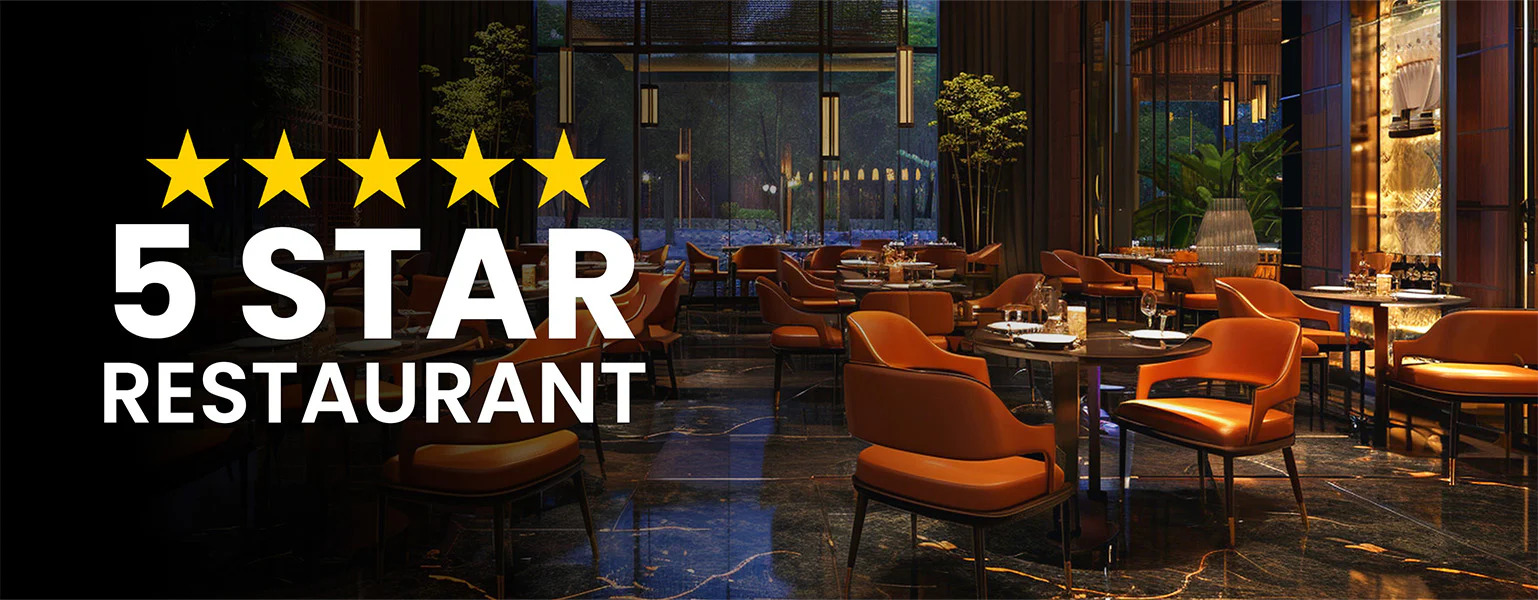
While Michelin only awards up to 3 stars, the term “5-star restaurant” has become widely used in marketing and consumer language, often implying:
-
World-class service
-
Exquisite cuisine
-
Attention to detail
-
Ambience and luxury
-
High-end pricing and exclusivity
It’s important to note that there is no universal, standardized 5-star rating system for restaurants. Different platforms, guides, and reviewers use different criteria. For example:
-
Forbes Travel Guide (formerly Mobil Travel Guide) has a 5-star rating for restaurants.
-
AAA (American Automobile Association) uses a Diamond system, where 5 diamonds signify ultimate luxury.
-
Yelp, Google Reviews, TripAdvisor, and Zomato allow users to rate restaurants on a 1 to 5-star scale, although these are crowd-sourced and subjective, not industry-certified.
How Are Star Ratings Given?

Depending on the source, the rating process can be vastly different.
1. Michelin Guide Inspectors
Michelin stars are awarded by anonymous inspectors who follow strict evaluation guidelines. These include:
-
Quality of ingredients
-
Mastery of flavor and cooking techniques
-
The personality of the chef in the cuisine
-
Value for money
-
Consistency over time and across the menu
2. Forbes Travel Guide
Forbes uses professional inspectors who visit restaurants anonymously and score them based on 900 standards, focusing heavily on service and overall dining experience.
3. Public Review Platforms
Crowdsourced platforms like Google, Yelp, or Zomato allow customers to leave reviews and ratings. While these offer useful feedback, they are not always consistent or curated, and can be influenced by personal taste, mood, or service on a specific day.
The Influence of a 5-Star Rating

Being labeled a 5-star restaurant, whether through Michelin, Forbes, or customer reviews—can significantly impact a business:
1. Enhanced Brand Prestige
A high star rating boosts the reputation of a restaurant, attracting food lovers, critics, celebrities, and tourists.
2. Increased Revenue
With prestige comes higher pricing power. Diners are often willing to pay premium prices for a meal at a reputed 5-star venue.
3. Greater Media Attention
Food bloggers, journalists, and media outlets often spotlight highly rated restaurants, further enhancing visibility.
4. Demand for Reservations
Many 5-star restaurants require reservations months in advance due to the high demand and limited seating.
Characteristics of a 5-Star Restaurant
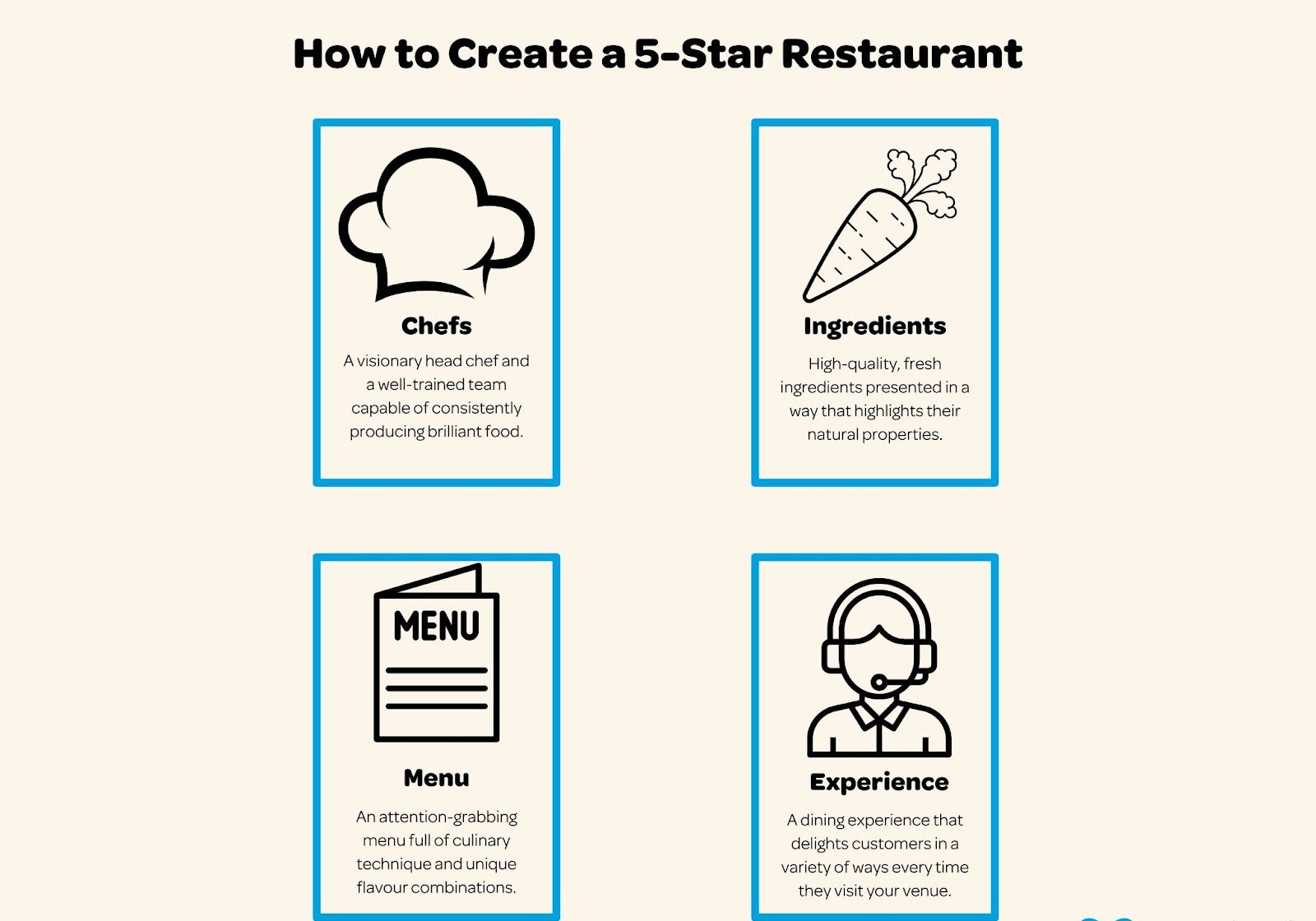
While there’s no universal checklist, most establishments that earn or claim “5-star” status share the following features:
-
Exceptional Culinary Skill: A 5-star restaurant often has a chef with formal culinary training or international recognition.
-
Unique and Artistic Menu: Dishes are often seasonal, creative, and beautifully plated.
-
Superior Ingredients: Ingredients are often organic, locally sourced, or imported for authenticity.
-
Impeccable Service: Waitstaff are highly trained, attentive, and knowledgeable.
-
Ambience and Design: Interiors are thoughtfully designed to enhance the dining experience.
-
Wine and Beverage Program: Extensive wine lists, cocktail menus, and sommelier services are common.
-
Consistency: The quality remains top-notch every time, not just once in a while.
The Psychology Behind Star Ratings

Stars are symbolic. Humans naturally equate more stars with better quality a simple, visual way to communicate value. For restaurants, using stars to market their quality is a way to tap into the customer psyche and suggest trust, consistency, and excellence.
However, this also creates pressure and expectation. A diner walking into a “5-star restaurant” expects a flawless experience. Failing to meet that standard even slightly can lead to harsh reviews or reputational damage.
5-Star vs. Michelin Star: What’s the Difference?
While often used interchangeably in casual conversation, they are not the same.
| Category | 5-Star Restaurant | Michelin Star Restaurant |
|---|---|---|
| Who Rates | Varies (Forbes, Google, Yelp, etc.) | Michelin Guide |
| Maximum Stars | Usually 5 | Maximum of 3 |
| Based on | Ambience, food, service (varies by platform) | Quality of food, technique, consistency |
| Formal Evaluation | Sometimes | Yes, highly professional and secretive |
| Common Examples | Forbes 5-Star, Yelp 5-star user reviews | Michelin 1, 2, or 3-star awarded restaurants |
Can a Restaurant Call Itself “5-Star”?
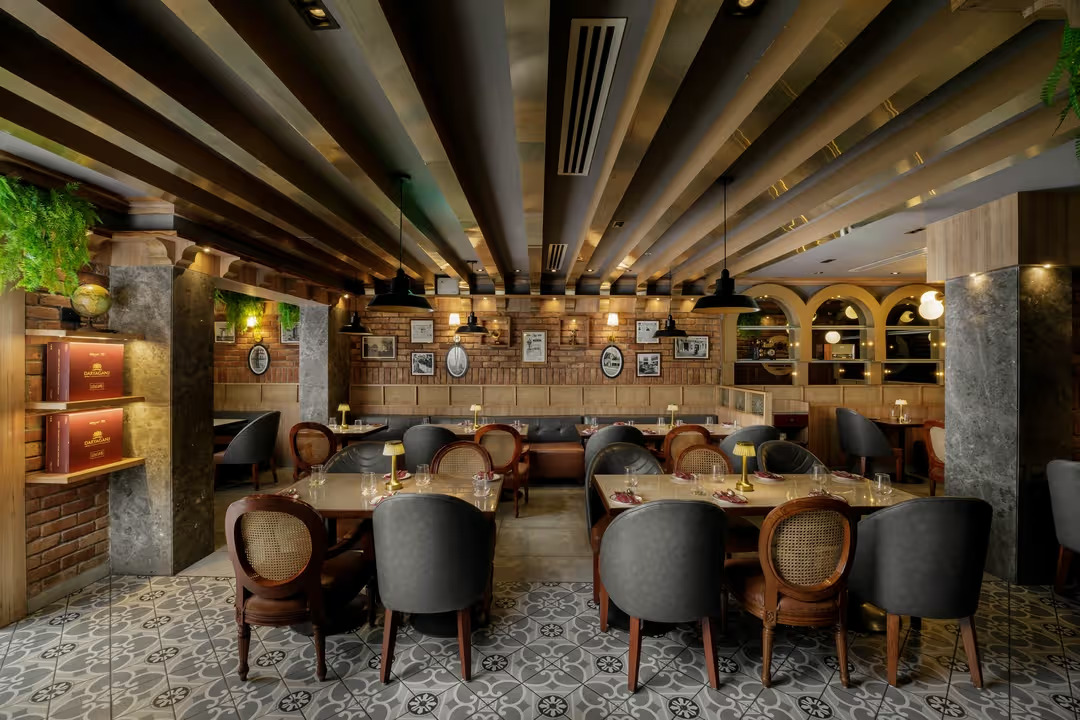
Technically, yes. Since “5-star” is not a protected term, many restaurants use it in marketing material or branding. However, unless awarded by a trusted authority like Forbes or Michelin, it may not carry much weight among discerning diners or critics.
That said, if a restaurant consistently delivers excellence in all aspects, it can earn a reputation equivalent to a 5-star status, especially in the eyes of loyal patrons and local communities.
Final Thoughts
The term “5-star restaurant” is both a marketing term and an aspirational standard in the dining world. While its origin lies in travel and hotel guides, it has become a widely recognized benchmark for fine dining experiences.
Whether the stars come from Michelin, Forbes, or loyal diners, they reflect the restaurant’s commitment to excellence, detail, and customer satisfaction. However, a truly outstanding restaurant is one that consistently goes beyond expectations not just once, but every time a guest walks through the door.
FAQs
1. Is a Michelin star the same as a 5-star restaurant?
No. A Michelin star is awarded by the Michelin Guide, with a maximum of 3 stars. A 5-star restaurant usually refers to a broader quality level and can be based on various rating systems or public reviews.
2. Who gives restaurants their star ratings?
Star ratings can be awarded by professional guides like Michelin and Forbes, or through customer reviews on platforms like Google, Yelp, or TripAdvisor.
3. Can a restaurant call itself 5-star without official recognition?
Yes, the term is not trademarked. However, doing so without meeting high standards may damage credibility.
4. What makes a restaurant 5-star quality?
Key elements include exceptional food, expert service, upscale ambiance, premium ingredients, and consistency in delivering a luxurious dining experience.
5. Why are star ratings important for restaurants?
They influence customer decisions, elevate brand prestige, boost pricing potential, and attract media and tourist attention.
Visit www.venuelook.com or call us at +91-8470804805 to start planning your event today.
For A-Z of your wedding and event planning requirements, contact us at Venuelook.com
You May Also Like:
- What Are Resources for Digital Marketing in the Restaurant Space?
- How Do Restaurants Increase Traffic? Proven Strategies for Attracting More Diners
- Effortless Recipes to Spice up your Next Office Potluck Party
- 10 Easy to mix Cocktail Recipes for Parties
- 10 Easy Salads Recipes For Your House Party
- Pop Up Your Birthday Party with these Great Mocktail Recipes
- Impress Your Guests with 10 Quick Desserts
Have you sent out invitations for your upcoming event? If not, save paper and send free online invitations now.

Looking for a party venue? Browse and book best-suited party venues from VenueLook.com